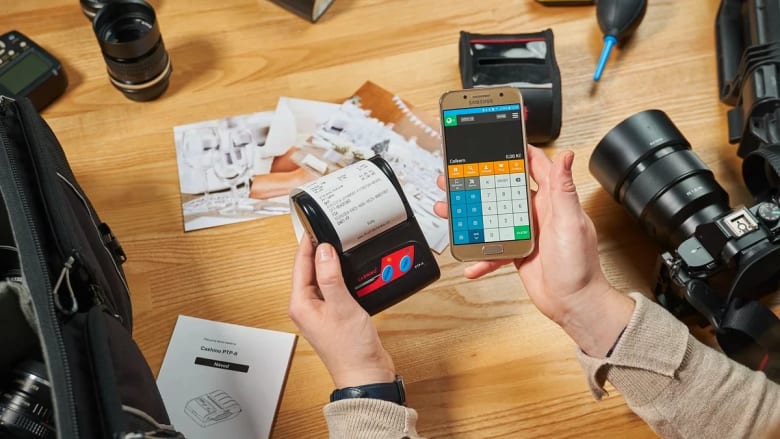
A screenshot is not a settled bank transaction. A convincing confirmation image can arrive before any money does; the receiving institution's ledger is the decisive independent record. Verify the receiving account directly and preserve independent confirmation.
A phone and payment terminal illustrate the distinction between initiating and receiving a payment
A screenshot that arrives before funds
A seller sends an image showing a completed bank transfer, but the recipient's banking app still displays no incoming entry. The seller says settlement is simply delayed and asks for the digital asset to be released immediately. No one needs to accuse the other party of fraud to handle this properly: an image of a claimed result is not the authoritative account ledger.
Bank submission versus recipient settlement
Payment screenshots are easy to crop, reorder or imitate. Even an authentic capture can show a transfer instruction rather than final settlement. Confirmation should come from the institution controlling the receiving account or from an independent transaction explorer if the transfer is on-chain. For a bank transfer, distinguish pending, submitted and completed states. For P2P trading, the platform order remains the record of which amount and recipient were agreed.
Distinguishing a receipt from a claim
Suppose a buyer receives a mobile banking screenshot showing a transfer as complete. The seller immediately asks for digital assets to be released, yet the receiving institution shows no available credit. The screenshot may be genuine, outdated, incomplete or deliberately manipulated. Those possibilities cannot be distinguished by examining its colors or logo. A more reliable first move is to identify the system that should record actual receipt and check it through a separately authenticated connection. The absence of funds does not reveal the cause, but it means the requested release has not yet been independently justified.
The status vocabulary matters. An instruction can be created, submitted, accepted for processing, booked and settled at different times. A convincing screenshot is not proof of settlement; the same limitation appears when reviewing what small P2P test transfers can actually prove. A cropped screenshot might show one stage while hiding another. Compare the unique transfer reference, sender, amount, currency and timestamp with the live P2P order. If the reference is not visible, ask for it through the same protected order channel. If the payment provider is experiencing a delay, preserve that fact instead of pretending funds have arrived. The buyer should not enter credentials into a payment-status link supplied by the counterparty.
An especially weak response is requesting a new screenshot every few minutes while leaving the transaction open to pressure. Two screenshots from the same sender are not two independent confirmations. A better response is a concise dispute note: the agreed beneficiary, the reference provided, what the recipient account currently shows and which official channel was contacted. This distinguishes an unresolved settlement from an accusation, while preventing irreversible release based only on a piece of image evidence.
How to verify a claimed incoming transfer
- Open the receiving account directly with a trusted bookmark or application. Do not use a link supplied in the same message as the purported payment proof.
- Compare the transfer amount, currency, sender and reference against the order. A matching total alone does not establish that the funds arrived from the expected party.
- Check whether the credited entry is spendable or only pending. A transaction reference can support investigation, but it does not magically convert a pending payment into available funds.
- If the transaction is unresolved, use the order's support or dispute process. Describe the mismatch factually and preserve the full conversation without editing images.
Why more screenshots are not independent proof
The most dangerous error is treating urgency as authentication. Phrases such as 'release now or lose your account' are pressure tactics, not confirmations. It is equally unhelpful to keep refreshing a screenshot or to ask the sender for a different crop. Only independent settlement evidence addresses the central question.
What a receipt image does not confirm
Payment evidence should originate with the receiving system whenever possible. The fact that two screenshots agree does not increase confidence if both were supplied by the same party asking for release.
Verify the recipient ledger before release
The verification rule is simple: trust the account or network that actually receives funds, not a graphic produced by the person asking for release. This also applies to payment claims on bookmaker landing pages, where a professional-looking confirmation panel does not prove a withdrawal will work.
Readers comparing payment assurances and bookmaker checks can consult https://4xbetnet.com/.